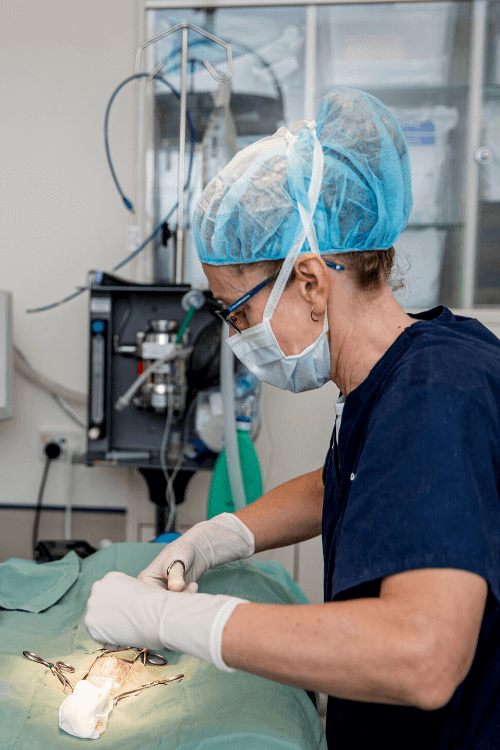


We recommend the de-sexing or neutering of all pet cats and dogs. This ensures a healthy pet without the worries of hormonal or sex-related diseases, particularly when they are older. Many anti-social behaviours such as urine marking, mounting or aggression can be avoided with de-sexing.
We recommended booking your pet in for desexing from 20 weeks onwards (5 months) provided your pet has completed its full primary vaccination course.
We see many non-de-sexed dogs at Lort Smith with potentially life-threatening conditions. They are expensive to treat and many of these require surgery and anaesthetic when the patient is in its most compromised state. This becomes a high-risk situation.
Common conditions include infected uteruses (pyometra), mammary tumours, diseases of the prostate and hernias which are secondary to being non-de-sexed. In almost all of these cases de-sexing would be recommended as part of the treatment. Such costs and risks could be easily avoided if de-sexing was performed when the pet was young.
If you’d like a more detailed overview of why desexing is recommended and how early desexing can reduce long‑term health and behavioural risks, you can read more here.
Book your pet’s desexing appointment
If you’re considering desexing for your dog or cat, our team is here to support you with clear advice and compassionate care. Get in touch with us to make an appointment or talk through any questions you may have. We are here to help.
Fees and payments
Lort Smith provides high-quality affordable animal health care to the whole community. By choosing Lort Smith Animal Hospital you are: providing your pet with expert care; offsetting the cost of vet care to people experiencing hardship; and contributing to the rehabilitation of vulnerable animals.
Please arrive 15 minutes early to allow for parking and checking-in at reception.
For more information – View our fees and payment options
Desexing Fees (Fees & Payments)