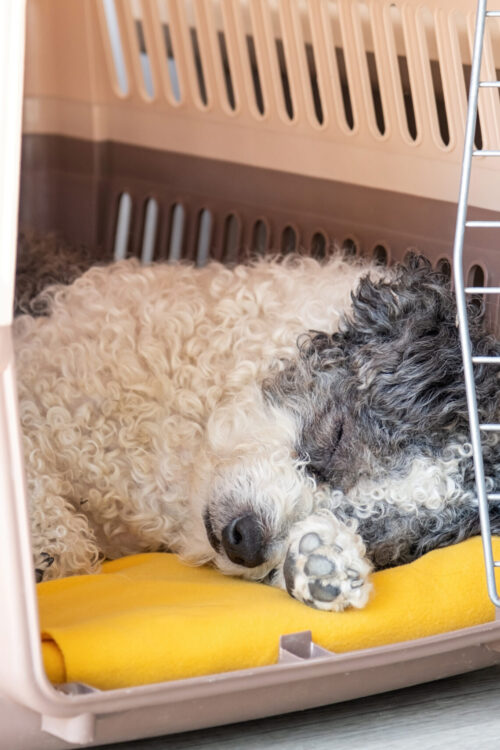


Crate training can be one of the most supportive tools for helping dogs feel safe, settled and confident at home. When introduced gently and used with positive reinforcement, a crate becomes a cosy retreat. Whether you’re welcoming a new puppy or supporting an adult dog, this guide will walk you through how crate training works and how to get started.
What is crate training and why is it important?
Crate training is the process of teaching your dog to see a crate as their own safe, comfortable resting place, much like a bedroom or cosy retreat. A crate is simply an enclosed space designed for dogs, usually made from wire, plastic or fabric, with enough room for them to stand up, turn around and lie down comfortably.
Dogs naturally seek out small, enclosed spaces when they’re tired or unsure, and a thoughtfully introduced crate builds on this instinct in a positive, supportive way. The crate becomes a familiar ‘den’ – a predictable, quiet spot where they can relax away from noise, visitors or household activity. This gentle, choice‑based approach is widely supported in animal welfare.
Benefits of crate training
Crate training offers a range of wellbeing and practical benefits for dogs:
- A safe, predictable space: A crate gives your dog a quiet retreat when they feel overwhelmed, tired or unsure.
- Support for toilet training: Puppies naturally avoid toileting where they sleep, making crate training a helpful part of early routines.
- Better sleep habits: Many puppies settle more easily at night when they have a cosy, enclosed space.
- Reduced destructive behaviours: A crate can help prevent chewing or unsafe exploration when you can’t supervise for dog.
- Helpful for travel and vet care: Dogs who are comfortable in a crate cope better with transport, boarding and recovery periods from veterinary procedures.
- Confidence-building: Learning to relax independently is an important life skill for puppies and older dogs alike.
When to start crate training
You can begin crate training as soon as your puppy comes home, as long as the process is gentle and unrushed. Older dogs can also learn to enjoy a crate, though they may need more time to build trust.
Common scenarios where crate training is especially helpful:
- Puppy crate training during the first few months
- Crate training at night to support sleep routines
- Crate training an older dog who needs structure or a safe resting place
- Crate training your puppy when establishing boundaries and independence
Choosing the right crate
The right crate should feel like a comfortable den, not a cage. Look for something sturdy, well‑ventilated and appropriately sized for your dog’s breed and age.
Crate types and sizes
Common crate types include:
- Wire crates have good airflow, are foldable, and are easy to clean. Many come with dividers for growing puppies.
- Plastic airline crates are more enclosed and cosier; often preferred by dogs who like darker, den‑like spaces.
- Soft crates are lightweight and portable, best for calm dogs or travel.
Size matters: your dog should be able to stand up, turn around, and lie down comfortably inside their crate at all times, without so much space that toilet training becomes difficult.
Setting up a comfortable crate
A crate should feel warm, inviting and safe. Consider:
- A soft bed or mat
- A blanket or cover to create a den‑like feel
- A safe chew toy or long‑lasting treat
- Placing the crate in a quiet but social area of the home
For older dogs or those with anxiety, a predictable setup can make a big difference in helping them relax. Many welfare organisations also highlight the importance of creating a calm, predictable environment around the crate.
How to crate train your dog
Crate training works best when it’s slow, positive and pressure‑free. The goal is for your dog to choose the crate because it feels good, not because they’re forced. There are many gentle, step‑by‑step ways to introduce crate training, and trusted training bodies outline similar gradual methods.
Creating positive associations
Start by making the crate a place where good things happen:
- Feed meals inside the crate
- Toss treats in for your dog to discover
- Leave the door open so they can explore freely
- Pair the crate with calm praise and gentle encouragement
This is especially important for puppy crate training, where early experiences shape long‑term confidence.
Building crate time gradually
Once your dog is comfortable entering the crate:
- Begin closing the door for a few seconds
- Gradually increase the duration
- Stay nearby at first, then slowly add distance
- Keep sessions short and end on a positive note
This gradual approach helps prevent frustration and supports sleep training for dogs who need help settling independently.
Crate training at night
Night‑time crate training can help puppies learn healthy sleep routines, but it’s important to remember that young puppies simply cannot hold their bladder overnight. Their bodies are still developing, and most will need one or more toilet breaks during the night for several weeks.
A realistic guide:
- 8–10 weeks: expect 2–3 overnight toilet breaks
- 10–12 weeks: usually 1–2 breaks
- 12–16 weeks: many puppies can manage one late‑night or early‑morning break
- 4–6 months: most can sleep through the night, but every puppy is different
Supporting your puppy overnight:
- Place the crate close to your bed at first so you can hear early signs they need to go out
- Set an alarm for the first few nights rather than waiting for crying
- Keep toilet trips calm and quiet – no play, no chatting, just out and back in
- Offer a comfortable bed, a familiar blanket and a safe chew toy
- Avoid withholding water; instead, offer normal access and a final drink a couple of hours before bedtime
For older dogs, a crate can still support good sleep habits, but they generally won’t need overnight toilet breaks unless there’s a medical or behavioural concern.
The goal is always to help your dog feel safe, supported and able to settle, not to “push through” the night before they’re ready.
Common crate training challenges
Even with a thoughtful approach, some dogs need extra support. Here’s how to navigate common hurdles.
Dog crying in the crate
Crying is often a sign of uncertainty, not misbehaviour. Try:
- Shorter training sessions
- More positive associations
- Ensuring your dog has toileted
- Avoid letting them out while crying, so they don’t learn that crying opens the door
If crying persists, consider whether the crate setup or training pace needs adjusting.
Refusing to enter the crate
If your dog hesitates:
- Go back to basics with treats and praise
- Make the crate more inviting
- Avoid pushing or forcing them inside
- Keep the door open and let them explore at their own pace
Some dogs simply need more time to build trust.
Need help training your dog?
If you’d like personalised guidance, our experienced trainers can help you build confidence, strengthen your bond and support your dog’s wellbeing. Learn more about our dog training programs here.
FAQs about crate training
When used correctly, crate training is not cruel. It’s a widely recommended, humane training method endorsed by behaviour experts and welfare organisations. A crate should never be used for punishment – only as a safe, positive space.
As a general guide:
- Puppies: short periods only, based on age and bladder capacity
- Adult dogs: up to a few hours at a time during the day
- Overnight: appropriate once your dog is comfortable and has toileted
Dogs should always have regular opportunities for movement, play and connection.
Crate training alone won’t resolve separation anxiety, but it can support a broader behaviour plan by giving your dog a predictable, secure resting place. For dogs struggling with anxiety, see our guide on separation anxiety.